FastLink
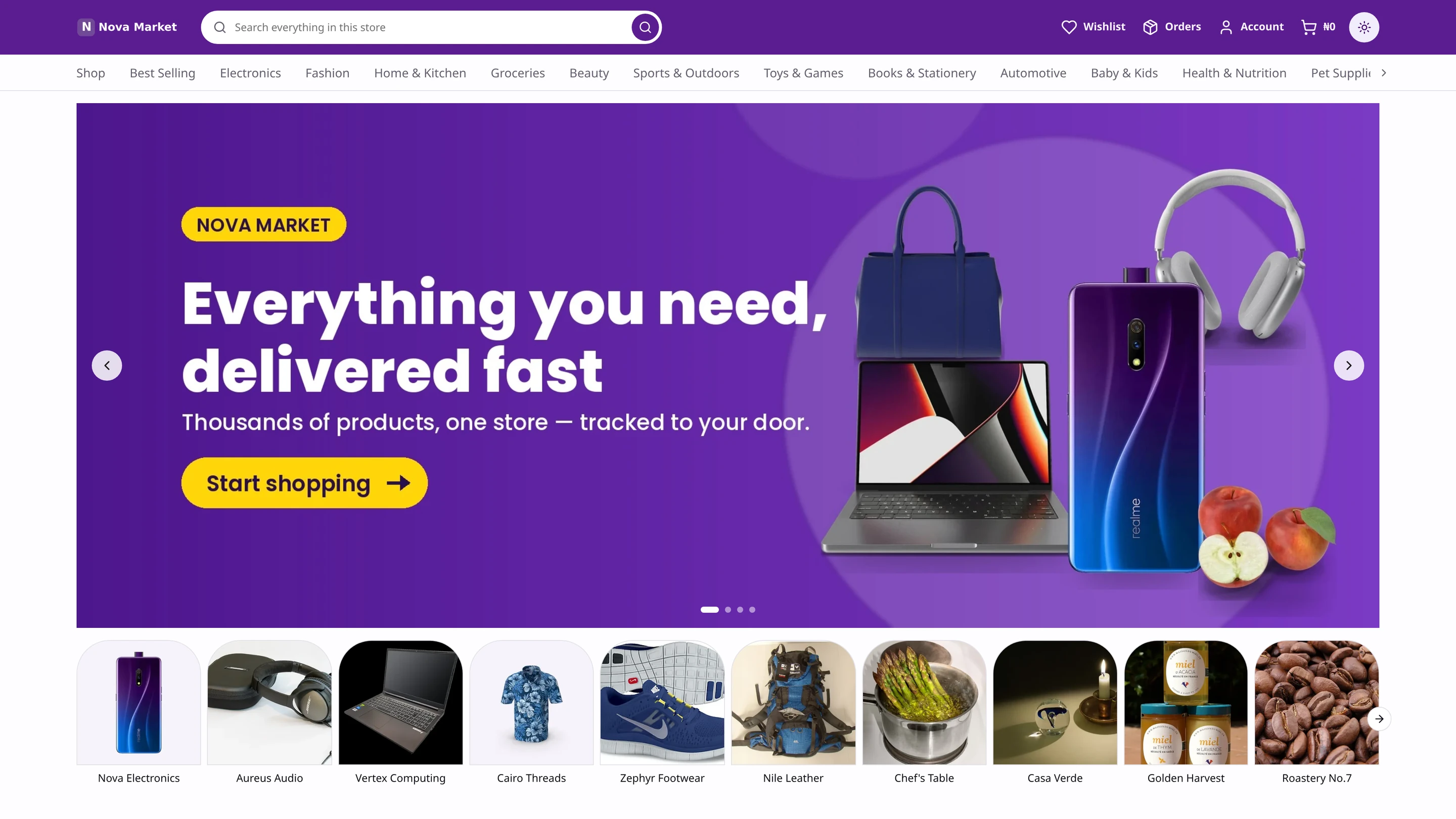
Multi-vendor e-commerce and last-mile delivery on one platform. Every vendor gets a branded storefront on its own subdomain. Orders flow to riders or partner shipping companies, and admins, vendors and couriers each work from their own dashboard.
- Role
- Full-stack developer: Django REST APIs, plus the Next.js dashboards and storefront.
- Engagement

 Cyparta
- Surfaces
- Vendor storefronts, Admin dashboard, Vendor dashboard, Shipping-company dashboard
- Links
- Demo storefront
- role-based dashboards: Admin, Vendor, Shipping Company
- 3
- granular permissions in the role builder
- 200+
- codebase serving every vendor's storefront
- 1
The problem
Online stores, delivery operations and shipping partners usually live in separate systems, so orders get re-typed and chased between them. FastLink connects all three: the store, the order and the delivery are one record that every party can see.
What it does
- 01A vendor signs up and gets a storefront on its own subdomain, with products, categories, brands, banners, coupons and reviews managed from the vendor dashboard.
- 02When a customer orders, the platform assigns it to a rider or hands it to a partner shipping company. Every step from confirmed to delivered is logged on a shared timeline.
- 03Shipping companies manage their riders, assign and re-assign orders, and chat in real time with vendors and the platform team.
- 04The admin team reconciles riders' daily cash collections through a settlement workflow.
- 05External marketplaces push orders in through a documented REST API with API keys, and every API call and webhook delivery is monitored live.
What I did
- Designed and built the Django REST APIs for orders, delivery assignment, rider settlements, chat, and the marketplace API with webhooks.
- Built real-time order and driver tracking and support chat over WebSockets.
- Built the Next.js dashboards for Admin, Vendor and Shipping Company, and the vendor storefront.
- Implemented subdomain-based routing so each vendor's store is served from one codebase.
Engineering
01
One codebase, a storefront per vendor
Each store resolves from its subdomain to that vendor's catalogue, branding and settings, so onboarding a vendor needs no deployment.
02
One order timeline for all three parties
Created, confirmed, picked up, in transit and delivered, plus postponed, failed and no-response states. Admin, vendor and shipping company all read the same timeline and get updates over WebSockets.
03
A public API other platforms build on
Marketplaces send orders in with API keys, and FastLink reports status back through outgoing webhooks with retries. An integration-monitoring screen logs every call and delivery.
04
Permissions down to a single action
A role builder with more than 200 granular permissions decides exactly what each employee can see and do.
Screens
Inside the product.
Click any screen to view it full size.
Stack
Backend
- Python
- Django
- Django REST Framework
- Django Channels
- Celery
- Redis
- MySQL
- JWT
- Docker
Frontend
- Next.js (App Router)
- React
- TypeScript
- NextAuth
- Zod
- React Hook Form
- shadcn/ui
- Tailwind CSS
- Recharts
Integrations
- REST API keys
- Outgoing webhooks
- Google Maps
- WhatsApp OTP
- S3-compatible storage